If you have noticed that your skin has changed in your 40s or 50s, becoming drier, thinner, less plump, or more prone to lines, you are not imagining it. These changes are real, measurable, and directly linked to the hormonal shifts of the menopause transition. As a GP with a background in obstetrics and gynaecology who now practises aesthetic medicine, Dr Inga Taganova is in a position to explain what is actually happening to your skin during menopause, and, more importantly, what genuinely helps.
Why Skin Changes During Menopause
Oestrogen is a powerful hormone with receptors throughout the body, including in the skin. Throughout your reproductive years, oestrogen has been stimulating collagen production, maintaining skin hydration, supporting the formation of new skin cells, and keeping blood vessels healthy and responsive.
When oestrogen levels decline, whether during the perimenopause transition or after menopause, all of these processes slow down. The effects are not gradual and invisible; research shows that skin loses up to 30% of its collagen in the first 5 years after menopause. That is a significant structural change, and it shows.
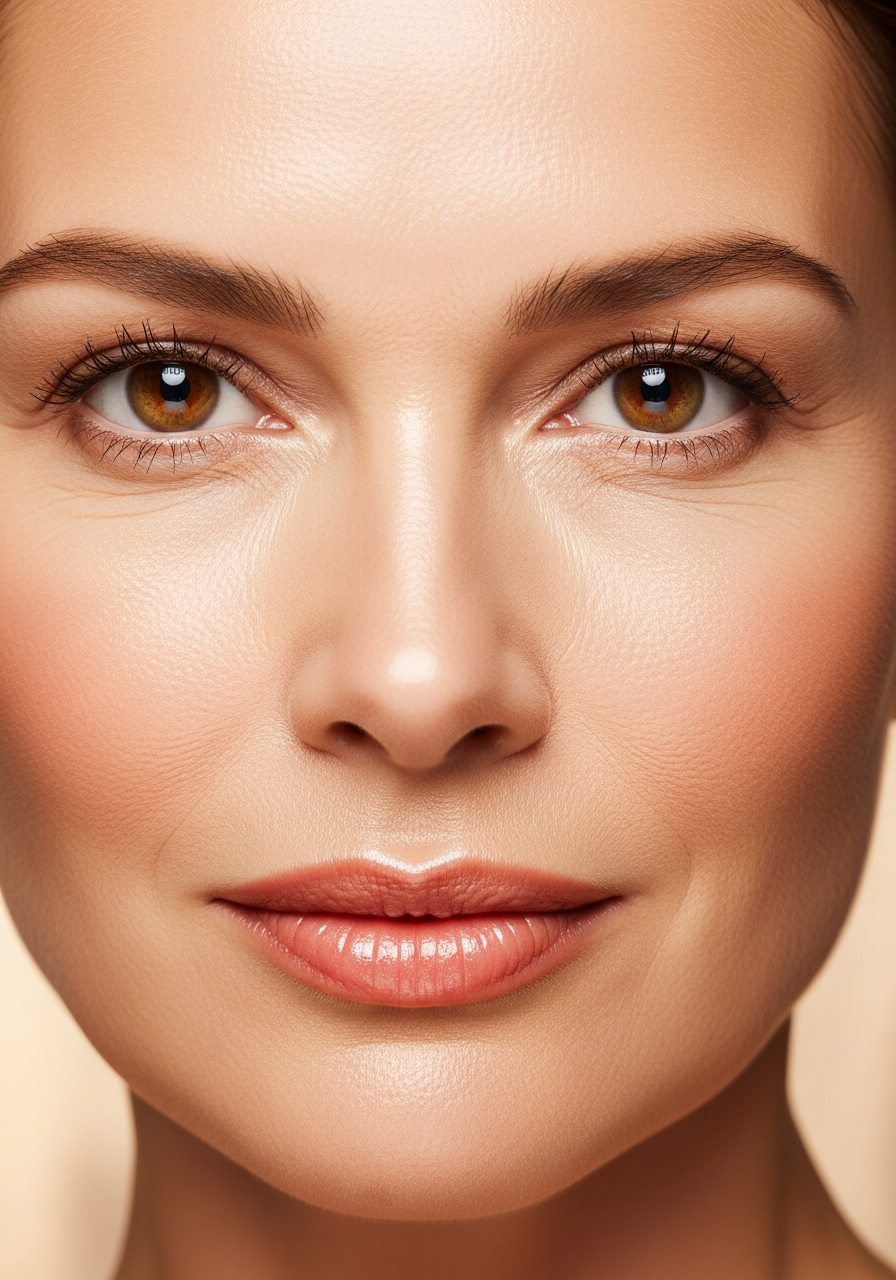
The Role of Oestrogen in Skin Health
Oestrogen acts on the skin in several interconnected ways. Understanding these mechanisms helps explain why the changes feel so sudden and significant for many women:
- Collagen production: Oestrogen stimulates fibroblasts (the cells that produce collagen) in the dermis. Without oestrogen, collagen synthesis slows and existing collagen fibres become thinner and less organised.
- Skin hydration: Oestrogen promotes the production of hyaluronic acid in the skin, the molecule responsible for water retention. Declining oestrogen = declining hyaluronic acid = drier, less plump skin.
- Skin thickness: The dermis itself becomes thinner without oestrogen, partly because collagen density decreases and partly because cell turnover slows.
- Wound healing: Oestrogen supports rapid skin repair. Post-menopausal skin heals more slowly and is more prone to scarring.
- Sebum production: Testosterone (which becomes relatively more dominant as oestrogen falls) can change sebum balance, sometimes causing adult acne in perimenopause.
Common Skin Changes During Menopause
The skin changes that Dr Inga Taganova most commonly addresses in her menopausal patients include:
- Increased dryness and flaking, even in women who previously had oily or combination skin
- Fine lines and wrinkles appearing or deepening more rapidly
- Loss of the plumpness and 'bounce' that characterised younger skin
- Thinning, skin may feel more fragile and papery
- Increased sensitivity and tendency to flush
- Uneven pigmentation and dark spots (from years of accumulated sun damage becoming more visible)
- Loss of jawline definition as skin loses its elasticity
- Adult acne or hormonal breakouts in perimenopause
How HRT Can Help Your Skin
Hormone replacement therapy addresses many menopausal skin changes by restoring oestrogen levels. Studies have consistently shown that women taking HRT have measurably greater skin thickness, higher collagen density, and better skin hydration than women of the same age who are not taking HRT.
Body-identical oestrogen, delivered via patch or gel to avoid first-pass liver metabolism, is the preferred approach. It is not a cosmetic treatment; it is a medical treatment that has skin benefits as a welcome secondary effect. Most women who start HRT report visible improvement in skin quality within 3 to 6 months.
It is important to note that HRT does not reverse all skin ageing, and its skin benefits are greatest when started early in the menopause transition. For women who are already several years post-menopausal, the skin benefits of HRT may be more limited, which is where targeted aesthetic treatments become particularly valuable.
Aesthetic Treatments That Complement HRT
HRT addresses the hormonal root cause of menopausal skin changes. Aesthetic treatments can target the structural and textural changes that have already occurred, producing results that neither approach achieves alone.
- Profhilo: An ultra-pure hyaluronic acid treatment that stimulates collagen and elastin production from within the dermis. Particularly well-suited to the skin quality changes of menopause, improving texture, radiance, and elasticity rather than adding volume. Dr Inga Taganova frequently recommends Profhilo as the first aesthetic treatment for menopausal patients.
- Anti-wrinkle injections: Address the dynamic lines (forehead, frown, crow's feet) that become more pronounced as skin loses elasticity. Can be combined with HRT for maximum effect.
- Dermal fillers: Restore the volume lost from the mid-face and temples, structural changes that HRT cannot reverse.
- Morpheus8: Radiofrequency microneedling that stimulates deep dermal remodelling and collagen production, particularly effective for skin laxity along the jawline and neck.
- Skin boosters: Microinjections of hyaluronic acid that provide direct hydration and stimulate collagen, ideal for very dry, thinned menopausal skin.
Profhilo for Menopausal Skin
Of all the aesthetic treatments available, Profhilo is perhaps the most naturally suited to the skin of menopausal women. Unlike traditional fillers that add volume in specific areas, Profhilo spreads through the tissue and stimulates the fibroblasts, the same cells that oestrogen was previously activating, to produce new collagen and elastin.
The results are a visible improvement in skin quality: better hydration, improved texture, increased 'springiness', and a more youthful radiance. Because it stimulates your own biology rather than replacing it, the results look and feel completely natural.
A standard Profhilo course consists of two treatments one month apart, with results lasting 6 to 9 months. Many of Dr Inga Taganova's menopausal patients combine Profhilo with HRT and find the combination produces results significantly better than either treatment alone.
Skincare Routines for Menopausal Skin
Alongside medical and aesthetic treatments, a well-chosen skincare routine makes a meaningful difference to menopausal skin. Dr Inga Taganova's general guidance for her menopausal patients includes:
- Gentle, fragrance-free cleansers that don't strip the skin's natural barrier
- A daily moisturiser with hyaluronic acid, ceramides, and niacinamide
- A vitamin C serum in the morning, potent antioxidant protection and collagen support
- Retinol in the evenings (starting low and building slowly), the most evidence-based topical ingredient for collagen stimulation
- SPF 30 or higher every single day, the most impactful single step for preventing further skin ageing
- Avoiding harsh exfoliants and high-fragrance products that can trigger sensitivity
Dr Inga Taganova's Integrated Approach
The Oxford Wellness Doctor is one of the very few clinics in Oxfordshire where you can receive HRT and aesthetic skin treatments from the same doctor, in the same appointment, guided by a GP who understands the deep connection between your hormones and your skin.
Rather than treating your fine lines and your menopause symptoms as entirely separate problems to be managed by different practitioners, Dr Inga Taganova takes an integrated view: addressing the hormonal root causes while also treating the structural and textural changes that have already occurred. For many of her patients, this combined approach produces transformative results.
Book a Menopause & Skin Consultation
Discuss your skin concerns and menopausal symptoms with Dr Inga Taganova in a single, comprehensive appointment.